
Indian Wonderwomen
Then, now, forever
6/19/20263 min read
If the saying: “Behind every successful man is a woman” is true even today, it has become overly clichéd, with India showing the way, not just with her galaxy of Goddesses, but also with the pioneering spirit of one band of women—the ANGLO INDIAN woman of then, now and forever.
If women’s empowerment in India is what it is today, if the freedom enjoyed by a sizeable minority of women in this country, many thanks must be given to the Anglo Indian woman’s role as home-maker and bread-winner, at one and the same time. In a land where a woman’s place was, till recently, subservient, the Anglo woman of old did what no other dared to do. She cooked, she cleaned, she did the laundry, she managed the household, she often went about getting a basic education, she cared for her growing family, and much much more, and that includes working side by side with her male counterparts. Like almost all other Indian women, her place and her identity were defined by her home, BUT, SHE DARED. It wasn’t easy for the early Anglo woman: she was frowned upon, segregated, ostracised even, because she had broken with tradition. She became an outcast, beaten down by the mores of a not-so-innocent society around her, bur she stood her ground. She had nowhere to go; she was also a child of India, unwanted and orphaned. It is no wonder that she sought refuge in her own kind, and slowly, very slowly, a unique citizen of India was born. The survival instinct kept the fledgling race together, and when the opportunity came, the Anglo Indian family—men, women and children, adopted and efficiently managed another start-up at the time—the Railways.
I have said it before, but I will say it again— the Indian Railways became the life blood of my community. Even as it spread further, and further, across this great land of ours, more and more of my kind gave their all to establishment of this mammoth enterprise. Today, the Indian Railways is the largest employer in the world, and it all began with the Anglo Indian effort. Yes, the men went out, but the home fires needed to be kept burning. This is where the Anglo Indian woman held fort, because home was where it began and ended for each and every Anglo railway-man, a temporary—though permanent—home that provided solace, sustenance and serenity after many long day’s6 journeys into night after night.There can be no discounting the role of the Anglo woman in providing a safe, pivotal point for her man to return to. Isn’t that really unique?
While she spent long hours alone, she tried her hands at many things: cooking , sewing, gardening, intricate handicrafts, to name just a few. With her horizons ever expanding, it was only natural that she tried other things. English was still a language to be acquired, and who else, but a native English speaker? That led to, perhaps, the nursing profession, teaching, and the ever-growing need for specialised secretarial services. With the world beginning to open up, every other meaningful employment was up for grabs. Not only the Anglo Indian woman, but her sisters in the every corner of the country launched out into careers that were never dreamed of: entertainment, travel, influencing, business, management, women’s studies, alternate histories, you name it and women grabbed every opportunity. In today’s world, they are everywhere, but nobody wants to notice where it all began. That is a case study in itself; modern research— of the useful or useless kind— keeps forgetting the source of the study, let alone the man/woman who initiated it. Very unique, again.
I’ll close with some words from John Lennon’s classic: “ Woman, I hope that you understand,
The little child inside of a man,
Please remember, my life is in your hands.”
What better way to give expression to the uniqueness of “woman”? Next week, I’ll delve in folklore and literature to bring you some more about that absolutely unique-in every way—creature.
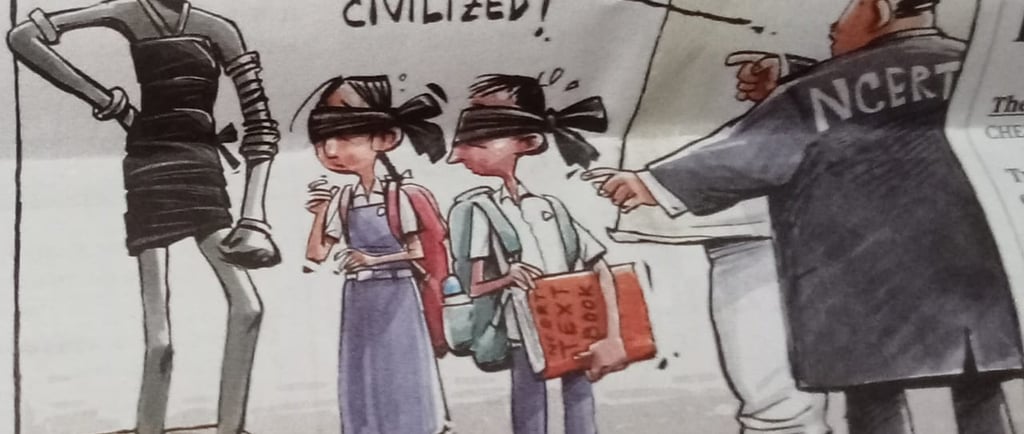
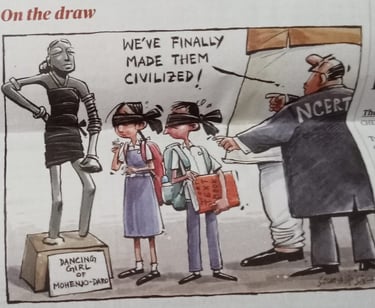
When you think you’ve hit the bottom, don’t give up; our country has much more. Very recently, the textbook traitors went and “d’raped’” a 4500-year-old sculpture because the nymph was nude. By clothing her torso, the so-called national educators believed they were upholding Indian standards of morality and decency. In effect, they reduced the small, subtle statue to a senseless sex object. I wonder what Josef Conrad’s words would have been, had he not already conjured up “The horror, the horror”, that lurks in the hearts of darkness everywhere? We are almost at the seventh rung of hell; do you honestly believe we were any place else?